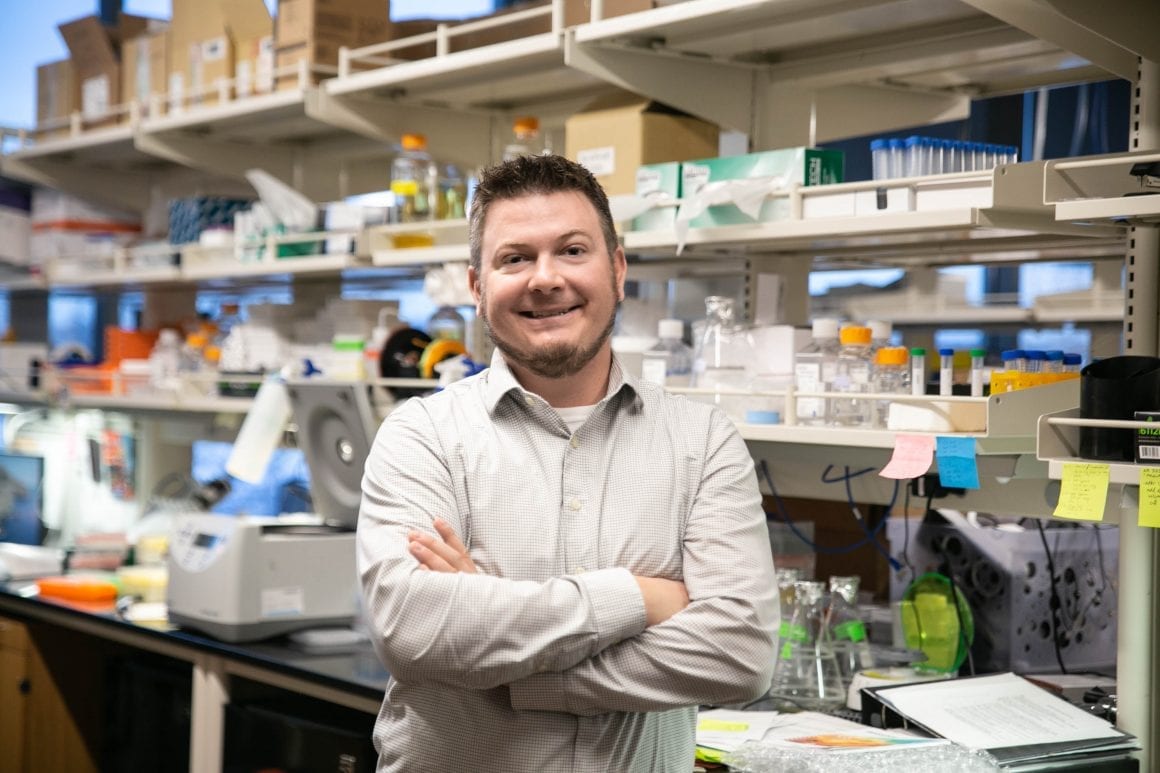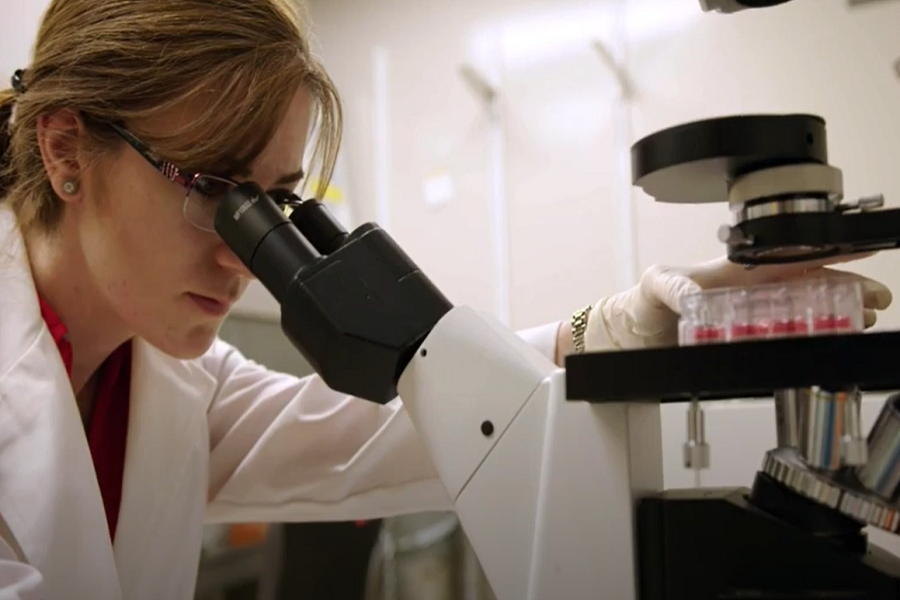
They say the best things that happen are unexpected. In Timothy Hallstrom’s lab, some retinoblastoma cells and immune cells acted so curiously, they inspired him to look into a new way to combat the eye cancer. Observing cancer is a little bit like watching a micro-battle plan play out. Cancer is usually on the offense, and scientists try to create a defense plan to fight …
Painting the Picture of Germ Cell Tumors in Kids
Over the last 9 years, Jenny Poynter, PhD, assembled the largest collection of genetic samples of pediatric germ cell tumors available in the world.
For 12 years, she has been researching germ cell tumors, which occur primarily inside the ovaries and testes. At long last, and thanks in part to Children’s Cancer Research Fund (CCRF), she’s poised to discover the reasons why kids’ genes go haywire and develop the disease.
Our top 5 childhood cancer research wins of 2020
Following the outbreak of COVID-19, Beau Webber, PhD, an expert in genetic engineering and stem cell research, had to essentially shut down his lab for two months.
2020 was a tumultuous year for many childhood cancer researchers, whose work most often takes place in labs that require hands-on, in-person work.
“The lab is where everything important happens,” said Beau Webber, PhD, an expert in genetic engineering and stem cell research at the University of Minnesota. His lab had to essentially shut down for two months following the outbreak of COVID-19.
However, many researchers were able to continue pursuing big ideas this year, despite the extra challenges. Research into new and innovative ways of fighting childhood cancers, including leukemia, osteosarcoma, neuroblastoma and brain tumors moved forward.
Here are our top 5 childhood cancer research wins of 2020.
Researchers use “biological scissors” to cut off paths for osteosarcoma
Osteosarcoma, a deadly bone cancer, has many lethal talents: it can shuffle around its genome to evade therapies, confuse the immune system, and grow exponentially even if it starts with just a few cancer cells in a child’s body.
A Cure in the Making for Osteosarcoma
In talking about a new project to develop new treatments for osteosarcoma, University of Minnesota researcher Beau Webber, PhD, uses a word he doesn’t typically get to use: cure. “I don’t throw that word around, and I definitely don’t use it lightly,” Webber said. “But it’s hard to overstate the potential here. It’s realistic to have that as our goal – there’s a real chance for …
The Road to a Clinical Trial for Childhood Brain Tumors
A new brain tumor treatment developed by researchers Christopher Moertel, MD and Michael Olin, PhD received Investigational New Drug (IND) approval from the FDA this summer.
This means the drug has been given the “okay” to be used for human patients and is a step closer to being ready for children with fatal brain tumors. The treatment, called a checkpoint inhibitor, has promise to help a child’s body effectively combat brain tumors when given a vaccine.
Relieving Insomnia in Childhood Cancer Survivors
Eric Zhou, PhD at Dana-Farber Cancer Institute in Boston is studying how to relieve insomnia for childhood cancer survivors. The problem: Childhood cancer survivors commonly suffer from sleep disorders like insomnia. Lack of sleep leads to bigger health problems like depression, behavioral problems and worsened physical health outcomes. Currently, there are no FDA-approved drugs for children with insomnia. For patients who haven’t had cancer, but …
An “Achilles Heel” for Mixed-Lineage Leukemia
Maxim Pimkin, MD, PhD at Dana-Farber Cancer Institute in Boston is exploring how depleting two proteins in the body could save children with an especially dangerous kind of leukemia. Research helps kids like Harriet, who is fighting leukemia. Click to read “Spicy One -Harriet’s Story.” The problem Research has progressed exceedingly for children with acute lymphoblastic leukemia (ALL), but patients with acute myeloid leukemia (AML) …
Targeting ‘undruggable’ leukemia proteins
Ani Deshpande, PhD at Sanford Burnham Prebys Medical Discovery Institute in California is working to target previously ‘undruggable’ proteins in acute lymphoblastic leukemia. The problem: Research helps kids like Liam, who is fighting ALL. Click to read “Leukemia and Lightsabers – Liam’s Story.” Some types of childhood leukemia have two genes that fuse together to form a cancer-causing fusion protein. Some of these fusions proteins …
How COVID-19 Impacts Cancer Survivors
As so many of us now know, people with compromised or weakened immune systems are at much higher risk for COVID-19 complications. This includes people going through cancer treatment currently and some who have received cancer treatments in the past like chemotherapy, radiation or bone marrow transplant. Their immune systems or other organ functioning may be not as well as everyone else’s, often for years. …
Treating Leukemia with Microbubbles
Texas Caroline de Gracia Lux , PhD at the University of Texas, Southwestern in Texas will use novel ultrasound technology to make acute lymphoblastic leukemia CAR-T cell treatment less toxic and improve the quality of life during treatment. The problem: Currently, CAR T-cell immunotherapy is the best way to cure relapsed acute lymphoblastic leukemia, one of the most common cancers in children. Unfortunately, this type of …
Targeting Pathways for Neuroblastoma
Logan (above) is fighting neuroblastoma. Approximately 700 kids in the U.S. are diagnosed with neuroblastoma each year. Read Logan’s story here. Xingguo Li, PhD at the University of Rochester in New York is investigating how to target and stop a newly discovered pathway which drives neuroblastoma. The problem: Despite aggressive therapy, approximately half of high-risk neuroblastoma patients die from the disease. While researchers have a …
Team Nat Progress Report
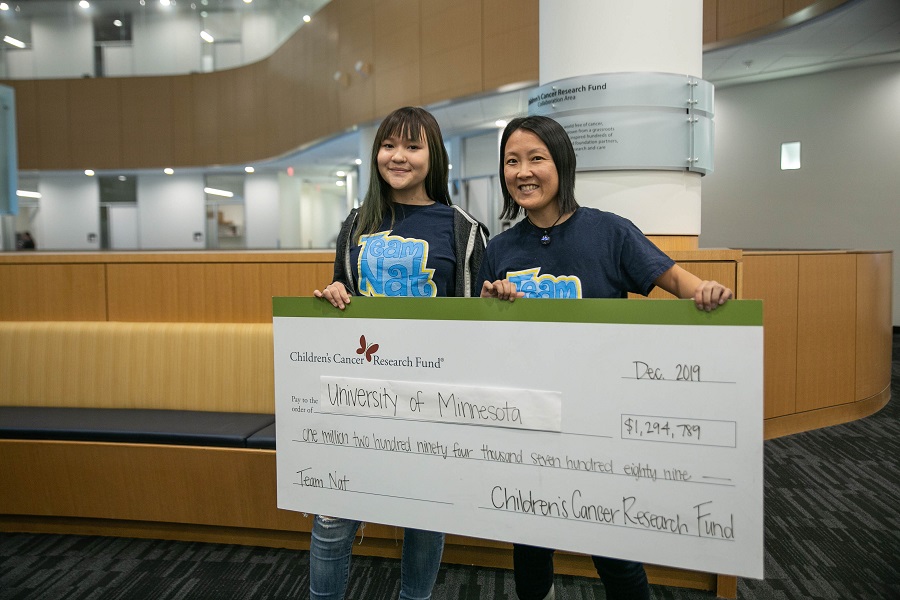
Nathalia Hawley passed away in April 2019, but not before leaving an incredible and lasting mark on the world. During her fight with cancer, Nat inspired thousands of riders during Great Cycle Challenge to raise over $1 million. The money is now funding research for better treatments and cures for osteosarcoma, the disease that took her too soon. Katy and Gabi stand with Nat’s doctor …
A Blood Test for Bone Cancer
When a child is diagnosed with osteosarcoma, a body of work from the University of Minnesota scientists over the past decade suggests the child generally falls into one of two groups – those who have a less aggressive form of the cancer and those with a more aggressive form. This essentially means that Group A has a good chance of being alive in 10 years …
Dream Fund Supports 7 New Research Projects
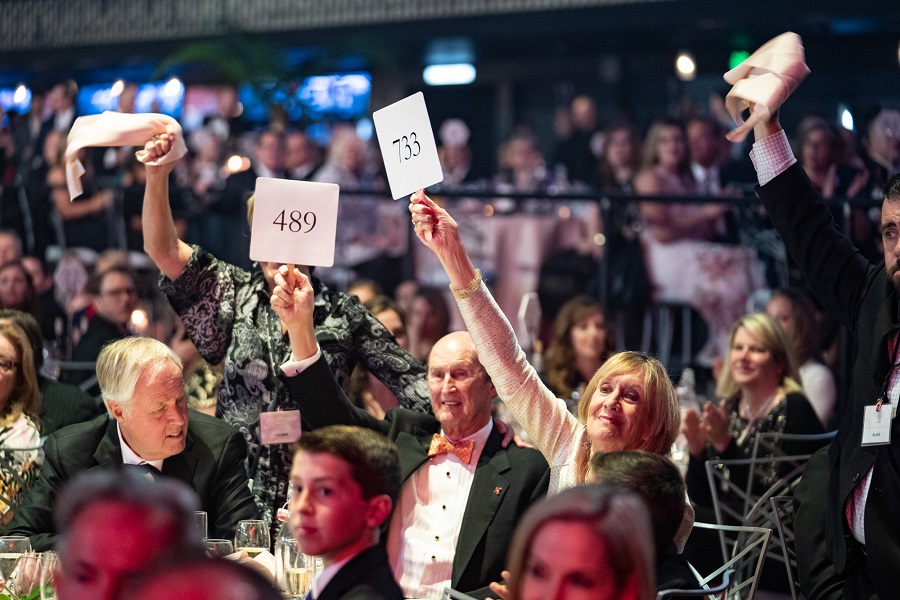
This past April, a group of incredibly generous supporters gathered at the Armory in downtown Minneapolis to celebrate progress and invest in the future of childhood cancer research. That night, these supporters raised nearly $1.3 million. Four months later, that support has funded seven new research projects at the University of Minnesota. Each of these projects were chosen by a group of peer-reviewers at the …
CCRF Funds 9 New Research Projects
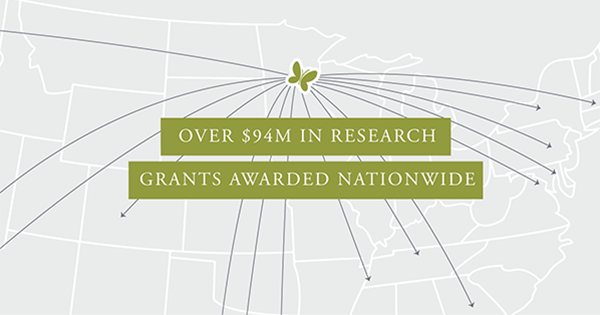
This September, your generosity, advocacy and awareness-building made a mighty big difference. This Childhood Cancer Awareness Month, CCRF awarded nine new research projects at different institutions across the country. This brings CCRF’s total to over $94 million in research grants nationwide. These 9 new research projects aim to: Investigate how a newly discovered regulatory pathway drives neuroblastoma development and creating targeted therapies to defeat the …
A “Better Set of Goggles” for Bone Cancer Imaging
When 16-year-old Nate (above) had his 10-hour surgery to remove the bone tumor from his ribs and spine, it was critical that doctors removed the cancer and margins around it to ensure every cancer cell was gone. But it’s hard for surgeons to visualize these tumors and get clear margins around them, because the technology they use wasn’t built to detect solid tumor cancers. For …
Less Toxic Drugs For Ewing Sarcoma
Texas The problem: The survival rate of children whose Ewing sarcoma cancer has spread is nothing short of heart-breaking, and only 20% of children with this cancer live for 5 years after the cancer returns. But Raushan Kurmasheva, PhD at the University of Texas Health Science Center at San Antonio, is making a novel Ewing sarcoma therapy less toxic. “Current therapies for children with relapsed …